Costume Coordination Catastrophe? Streamlining Your School or Community Theater's Wardrobe Process
Tired of costume chaos in your school or community theater? Learn how to streamline your wardrobe process for stress-free productions. Read on!
· By CueCall Team
Topics: costume management, theater production, community theater, school theater, wardrobe, production management, organization, stagecraft

Ah, costumes. The vibrant tapestry that brings your characters to life. But let's be honest, in school and community theater, the costume process can often feel less like a finely woven garment and more like a tangled ball of yarn. Are you constantly searching for that missing doublet? Do you have piles of garments with no idea where they belong? You're not alone!
The Costume Coordination Conundrum
Whether you're dealing with a period piece requiring meticulous research and construction, or a contemporary show with specific character aesthetics, costume management can quickly become overwhelming. The challenges are amplified in volunteer-driven settings where time and resources are often stretched thin.
Think about it: From initial design sketches to sourcing materials, coordinating fittings, managing alterations, and ensuring everything is clean and stage-ready, the wardrobe department carries a significant load. Without a system in place, things can quickly unravel, leading to:
- Missed deadlines: Crucial costume pieces not ready for dress rehearsals.
- Budget overruns: Last-minute scrambling to replace lost or damaged items.
- Frustrated volunteers: A disorganized process leads to burnout and resentment.
- Stressed-out directors and stage managers: Constantly firefighting wardrobe emergencies.
Why a Streamlined Costume Process Matters
Investing in a robust costume management process isn't just about avoiding headaches; it's about enhancing the overall quality of your production and fostering a positive environment for your cast and crew. Imagine:
- Confident actors: Feeling comfortable and properly attired enhances their performance.
- Happy costume volunteers: A well-organized system makes their work more rewarding.
- Reduced stress: Knowing that costumes are under control allows you to focus on other critical aspects of the production.
- A polished final product: A cohesive and well-executed costume design elevates the entire show.
Practical Solutions for Wardrobe Woes
So, how can you tame the costume chaos and bring order to your wardrobe department? Here's a breakdown of actionable strategies you can implement right away:
1. Inventory and Organization
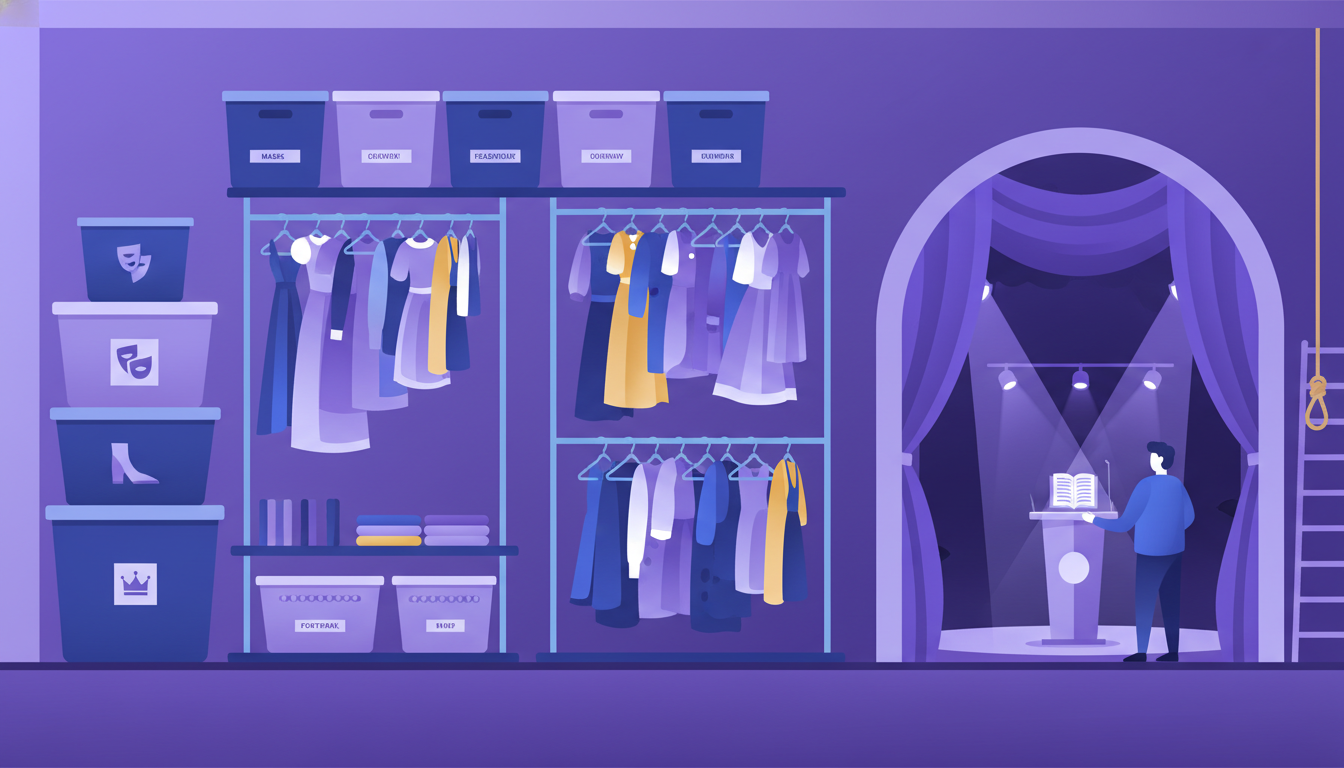
The foundation of any successful costume process is a comprehensive inventory system. Think of it as your costume library. Here’s how to get started:
- Catalog everything: Document each costume piece with detailed descriptions, including size, color, material, and any distinguishing features.
- Assign unique identifiers: Use a numbering or labeling system to easily track each item. Think of a clear naming schema, such as "ProductionName_CharacterName_ItemType_Color" (e.g., "RomeoAndJuliet_Romeo_Doublet_Red").
- Utilize storage solutions: Invest in garment racks, labeled bins, and clear plastic containers to keep costumes organized and protected.
- Designate storage areas: Assign specific areas for different types of costumes (e.g., period pieces, modern wear, accessories).
- Regularly update your inventory: As costumes are added, removed, or altered, update your records accordingly.
2. Streamlined Workflow
A well-defined workflow ensures that each stage of the costume process runs smoothly.
- Design phase: Develop clear costume sketches and descriptions early in the process.
- Sourcing and procurement: Establish a budget and timeline for acquiring materials.
- Fittings: Schedule fittings well in advance and document any alterations needed.
- Alterations: Assign alteration tasks to specific volunteers and track their progress.
- Cleaning and maintenance: Implement a system for cleaning and repairing costumes.
- Return and storage: Establish a clear procedure for returning costumes after each performance.
3. Communication is Key
Effective communication is crucial for keeping everyone on the same page.
- Regular meetings: Hold regular meetings with the costume team to discuss progress, address challenges, and coordinate tasks.
- Clear communication channels: Establish clear channels for communication, such as email, group chats, or a dedicated online platform.
- Visual aids: Use visual aids, such as costume boards or mood boards, to communicate the overall vision.
- Fitting schedules: Clearly communicate fitting schedules to actors and volunteers.
- Alteration requests: Provide clear and concise alteration requests to the alteration team.
4. Leveraging Technology
Technology can be a powerful tool for streamlining your costume process.
- Spreadsheets: While not ideal for all aspects of costume management, spreadsheets can be useful for tracking inventory, fittings, and alterations.
- Photography: Take photos of each costume piece for easy reference. Attach these to your inventory records.
- Shared drives: Utilize shared drives to store costume designs, sketches, and other relevant documents.

5. Embrace Volunteers
Volunteer support is the lifeblood of many school and community theater groups. Embrace their help and create a positive and rewarding experience for them.
- Delegate tasks: Assign specific tasks to volunteers based on their skills and interests.
- Provide training: Offer training on costume construction, alteration techniques, and inventory management.
- Show appreciation: Recognize and appreciate the contributions of your volunteers.
- Foster a sense of community: Create a welcoming and supportive environment for all volunteers.
Actionable Steps to Costume Confidence
Ready to transform your costume process from chaotic to controlled? Here are a few actionable steps you can take today:
- Conduct a costume inventory audit: Take stock of your current costume collection and identify areas for improvement.
- Develop a basic costume inventory spreadsheet: Even a simple spreadsheet is better than nothing!
- Recruit a dedicated costume team: Enlist the help of enthusiastic volunteers who are passionate about costumes.
- Schedule a costume planning meeting: Gather your team to discuss your goals and develop a plan of action.
- Start small and build from there: Don't try to overhaul your entire costume process overnight. Focus on making small, incremental improvements.
Level Up Your Production Management
Managing costumes is just one piece of the larger production puzzle. If you're looking for a way to streamline all aspects of your school or community theater production, consider exploring comprehensive theater management platforms. While spreadsheets and shared documents can help, a dedicated platform like CueCall can centralize your communication, scheduling, inventory management, and even cue sheet creation. By bringing everything together in one place, you can save time, reduce errors, and focus on what you love most: creating amazing theater!